Lattice connects company evidence, financial analysis, due diligence and review with the work that follows—portfolio context, transaction preparation and ongoing monitoring.
A lending or investment decision depends on more than a single model.
Teams need to understand the business, examine evidence, compare assumptions, coordinate reviews and recognise what has changed.
01 / The evidence
Start with the business and the evidence.
Start with what the business does, how it earns and what it owes. Lattice’s broader scope connects research, financial information and diligence to that company context.
Read source documents alongside the financial evidence.
Distinguish established facts from analytical assumptions.
Keep unanswered questions visible for the next reviewer.
An assessment with a traceable basis and its open questions intact.
02 / The analysis
Make the reasoning visible.
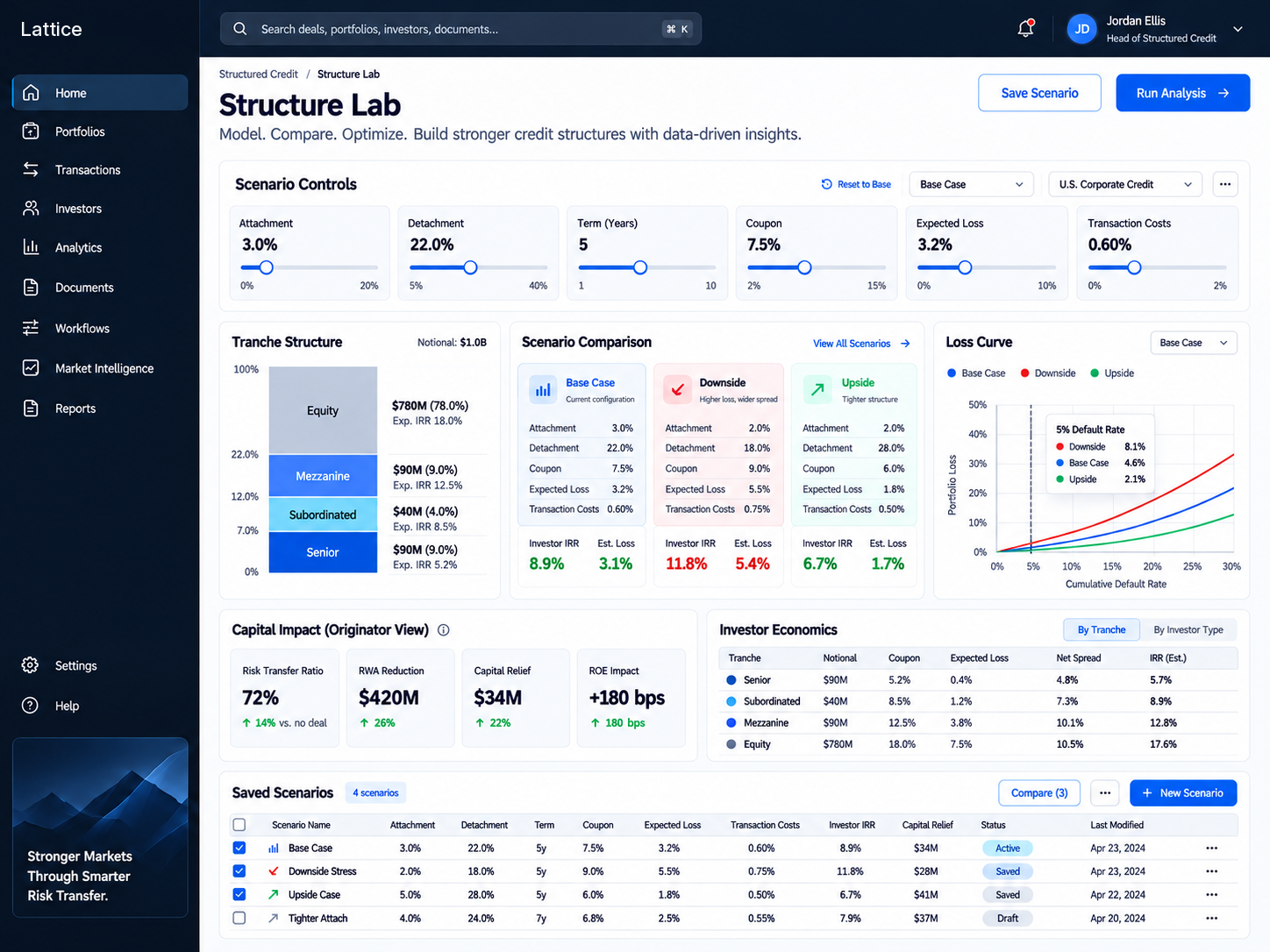
The Structure Lab preview puts scenario inputs, structural choices and analytical comparisons together. It is one specialist example within Lattice’s broader company, credit and investment work.
Compare alternatives and the assumptions behind them.
Examine how changed inputs affect the analysis.
Identify what financial analysts, credit reviewers and structurers need to validate.
An explained analytical choice, ready for further review.
Agree what is being reviewed, which version is current and who owns each question.
Lattice’s review scope connects the source material, analysis and diligence used by analysts, risk reviewers, legal and compliance teams.
Record the basis for the assessment.
Keep the source version and open questions together.
Assign the work required before the next stage.
04 / Transaction preparation
Carry the work into the next decision.
Move from a reviewed proposition to the relevant conversations, then compare the responses. These two previews show that sequence.
04 / Transaction preparation
Understand why a mandate might fit.
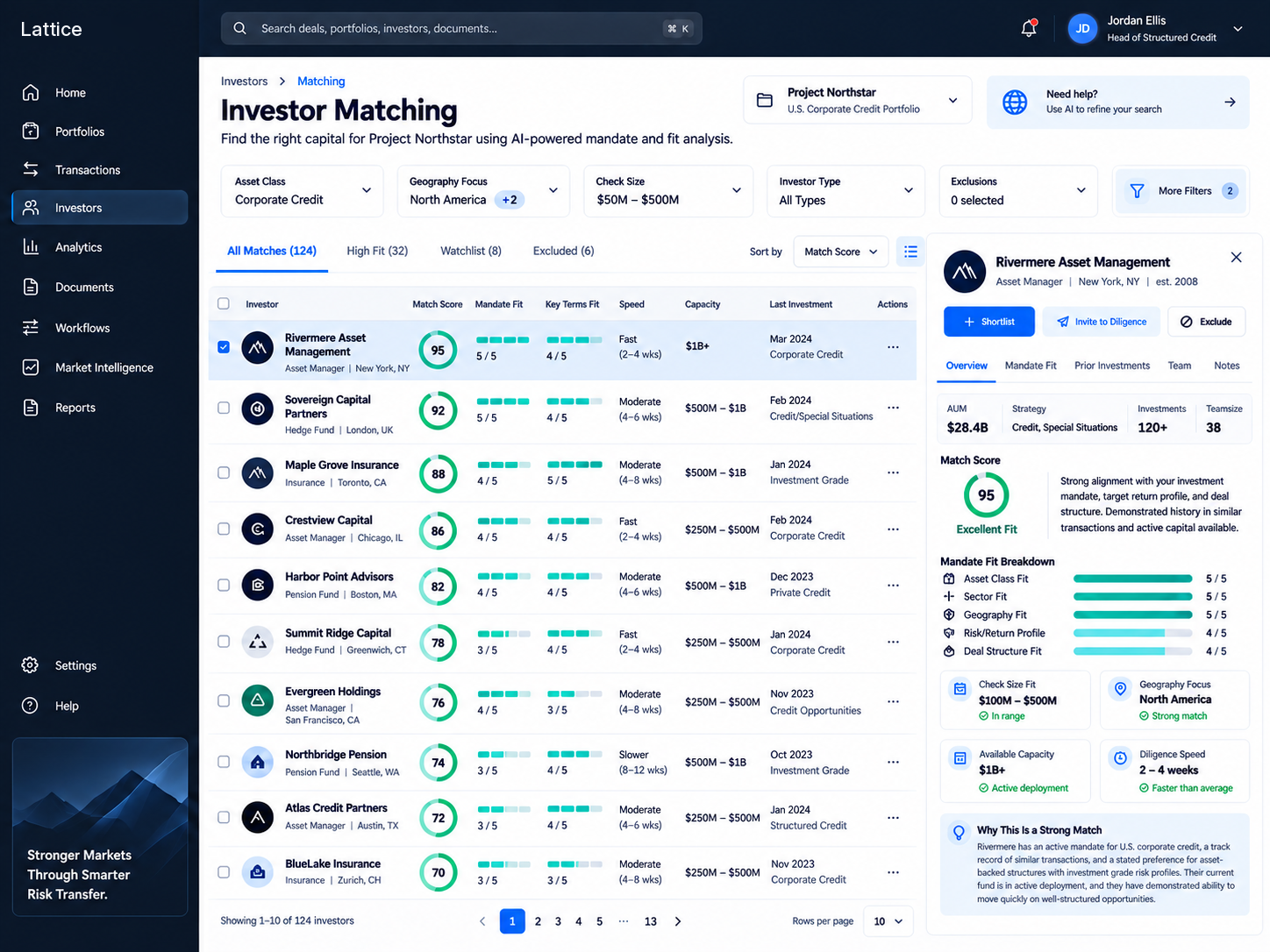
The Investor Matching preview connects mandate filters with investor comparisons and an explanation of fit.
Consider asset class, geography, scale and terms.
Question the basis for each potential match.
Prepare a shortlist and focused diligence conversations.
A reasoned shortlist for the transaction team to review.
Investor Matching
Mandate filters, investor comparisons and the reasons behind a potential fit. Product preview · Illustrative data.
04 / Transaction preparation
Compare responses before the decision.
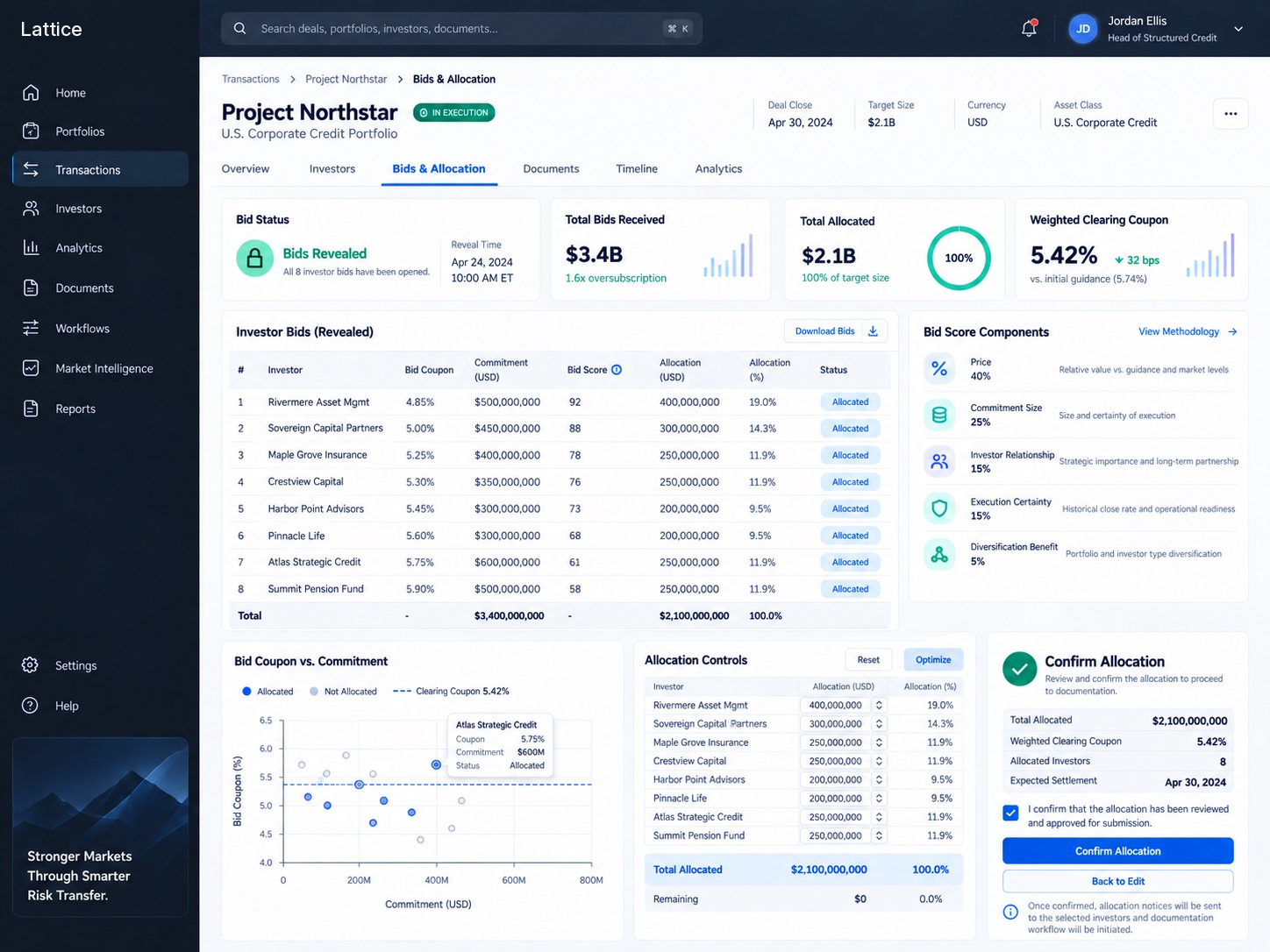
The Bids & Allocation preview brings responses, allocation inputs and confirmation context into one view.
Compare offered terms and proposed commitments.
Examine intended allocations and their review status.
Keep the underlying responses available to decision-makers.
An allocation proposal with the evidence needed for review.
Bids & Allocation
Investor responses, allocation controls and review status in one transaction context. Product preview · Illustrative data.
05 / Change and monitoring
Understand what changed.
A new document, revised assumption or portfolio amendment can change an assessment already in progress.
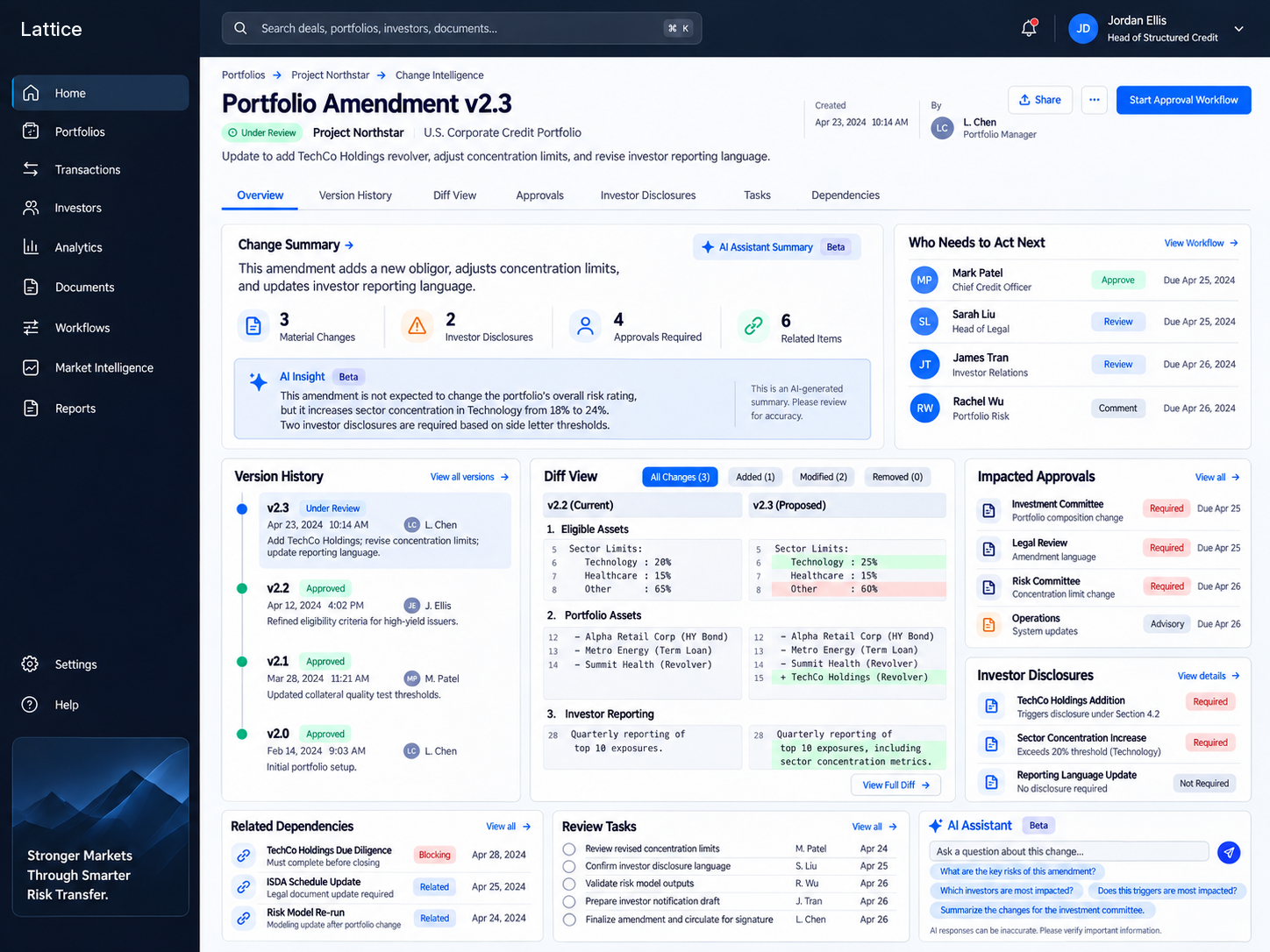
The Portfolio Amendment preview connects version history and change comparisons with disclosures, review responsibilities and related dependencies.
AI-assisted summary
An AI-assisted summary can surface a change and suggest where to look. It is not a human review, an approval or an investment decision.
Human review
The responsible reviewer needs to check the source documents and version comparison, examine the disclosure context and record the judgement and follow-up required.
Lattice’s broader monitoring scope includes covenants, portfolio exposure, treasury and collateral context. Specialist SRT/CRT workflows are one possible application of the wider company, credit and transaction work.
Portfolio Amendment / Change Intelligence
Version history, changed evidence, review responsibilities and related dependencies. Product preview · Illustrative data.
Who it is for
The people carrying an assessment forward.
Research and origination
Analysts and origination teams bringing company information, financial evidence and diligence into an initial assessment.
Review and portfolio teams
Credit, risk and portfolio reviewers examining assumptions, exposure, concentration and changes to the underlying position.
Transaction and support teams
Structurers, treasury and collateral teams, legal and compliance reviewers, and operations preparing the next stage.
Exploring the fit
Follow one decision from evidence to review.
Choose a real assessment process, the information it relies on and the people responsible for reviewing it.
Explain the business, lending or investment question and the people responsible for reviewing it.
Map the evidence.
Identify source material, analytical assumptions, open questions and the information that changes over time.
Agree what to examine.
Choose the relevant product scope and the outputs to review. The previews illustrate a working approach; an evaluation should establish the requirements and capabilities appropriate to your process.
The next conversation
What context does your next decision need?
Tell us about the assessment, the evidence behind it and the people who need to carry it forward.